
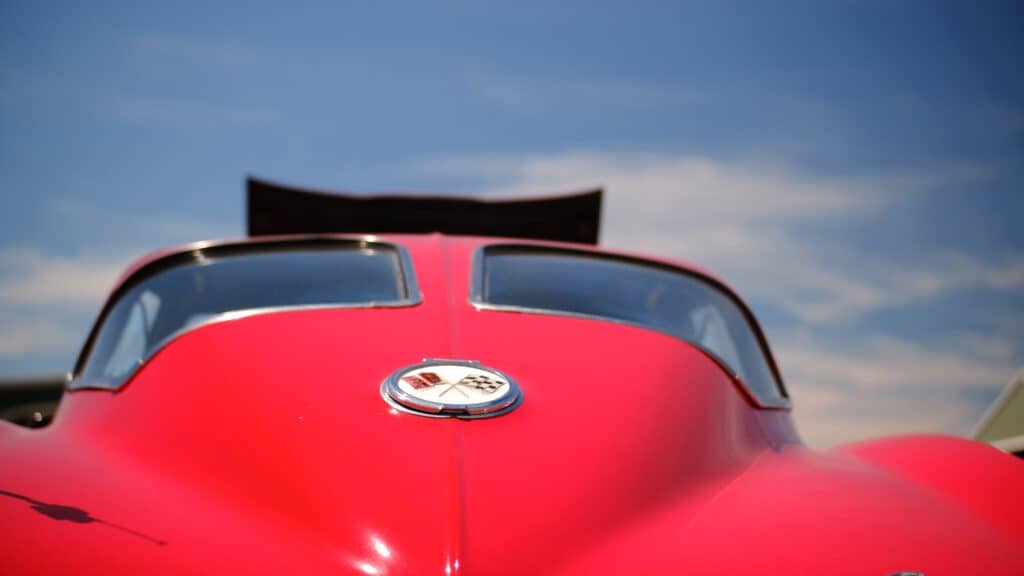
Although you could choose any model year or production generation of the Corvette, there is one in particular that grabs the attention of collectors everywhere. That model, of course, is the timeless 1963 Corvette Sting Ray split-window coupe.
There were several people at General Motors who had a hand in designing what eventually became the ‘63 Corvette. Some of the most well-known names include Zora Arkus-Duntov and Bill Mitchell, who had designed the racing Sting Ray concept. In the end, the two designers who officially received credit for the second generation Corvette are Larry Shinoda and Anatole Lapine.
Built to launch the second generation of Corvette production, the ‘63 Vette Sting Ray introduced the C2 to the world with style. Built from 1963 to 1967, the second generation Vette (C2) introduced a lot of unprecedented features to Chevy’s flagship American Sports Car. For example, it was the first Vette to be available as a coupe.
It was also the first production Corvette to feature wind tunnel testing which also influenced the final shape of the fiberglass body. The 1963 model also featured hidden headlights, a first for an American car since the 1942 DeSoto. The Corvette would go on to feature hidden headlamps until the introduction of the sixth generation C6 in 2005.
By the time the 1963 Corvette was available to the public, Chevy engineers added twice as much steel support in its central structure compared to the first generation roadster (built from 1958 to 1962). You would think that would have made the C2 heavier than the C1, but thanks to the genius of GM engineers, it wasn’t.
To achieve a lighter curb weight, engineers reduced the overall thickness of the fiberglass body in an effort to shed a few pounds. It worked and the fastback design itself is a masterpiece while tipping the scales at a svelte 3,362 pounds.
To make entering and exiting the vehicle easier, GM cut the doors of the coupe into the roof of the car. Once inside the ‘63 coupe, long-time enthusiasts instantly recognize the modernized twin-cowl dash used since 1958. Chevy made several improvements to the interior experience for the C2, including a larger glovebox, more effective heater, and a cowl-ventilation system.
As for the 1963 split-window Corvette coupe design, it was actually inspired by a combination of Harley Earl’s Oldsmobile Golden Rocket concept show car and the Scaglione-bodied Alfa Romeo coupe shown at the 1954 Turin Auto Show.
Bill Mitchell is often credited with the split-window design making it to production, he often declared the 57SC Bugatti “Atlantique” coupe as his original inspiration. The 1963 Corvette coupe is the only C2 model to feature the iconic rear-split-window design, that’s one of the reasons this specific Sting Ray is so desirable to collectors.

Hitting the Open Road in the 1963 Corvette
When it comes to the ‘63 Vette, seeing is believing, but driving one is even better. Getting behind the wheel of the ‘63 split-window is a dream come true for every Corvette enthusiast. The front-mid-engine, rear-wheel-drive layout delivers a vintage American sports car driving experience.
You really feel the road while driving a classic sports car like this. Every subtle detail of the pavement is at your disposal and when you accelerate, you feel the rear tires kick down before gripping and ripping your way to driving freedom.
Then, the real magic kicks in as the nostalgia of the scents and sounds tug on the strings of yesteryear. As you accelerate, the 327 cubic-inch V8 engine roars through the apex of every turn and echoes through the landscape on straights. Every 1963 Corvette came with the 327 V8 from the factory, but different horsepower configurations were available: 250 hp, 300, hp, 340 hp, or 360 hp.
Many ‘63 Sting Ray models feature a four-speed manual gearbox, giving you complete control over the engine’s powerband. Over 18,000 Corvettes left the factory in 1963 with a four-speed manual instead of the automatic transmission alternative. It’s estimated Chevy shipped about four manual gearbox Vettes for every one automatic sold during the 1963 model year.
Of course, you can’t discuss the exhilarating driving dynamics of the 1963 Vette without mentioning the chassis design. This is where the superior handling of the C2 is made possible.
Chevy designed the C2 to have a shorter wheelbase than its predecessor. Thanks to the redesigned weight distribution of the tighter wheelbase chassis, GM made the Sting Ray lighter up front while adding 80 pounds over the rear wheels. This greatly enhanced the maneuverability and traction of the C2 chassis over the C1 design.
GM made the C2 easier to steer by using a recirculating ball race steering setup. The C2 also features improved stopping power over its predecessor thanks to the four-wheel cast-iron 11-inch drum brakes. If you wanted even more stopping power, the C2 was also available with optional sintered-metallic linings, power-assist braking, and Al-Fin brake drum upgrades.
There is also a fully independent rear suspension on the C2, originally envisioned by Duntov on the CERV I concept. Other chassis and suspension improvements found on the C2 include a frame-mounted differential, rubber-cushioned struts, and a standard anti-roll bar.
Overall, the improvements made to the rear suspension reduced weight compared to the old solid axle design. It also significantly reduced unsprung weight. For the most part, the front suspension of the C2 shared a lot in common with the C1, including unequal-length upper and lower A-arms on coil springs concentric with the shocks.
To help absorb vibrations before they reach the steering wheel, GM bolted a new hydraulic steering damper to the frame rail and relay rod. This provided a more comfortable steering experience in the C2. On top of that, in another first for the Corvette, Chevy offered an optional hydraulically assisted steering system on select C2 models.
To this day, the 1963 Corvette split-window coupe is highly sought after by collectors and enthusiasts alike. Like all collector’s cars, the market stays pretty consistent. Expect to see pricing between $140,000 to over $200,000 for some of the best show-stopping split-window examples available.
Some will be preserved as all-original examples while others are restomod customs built by expert shops. If you’re looking to get behind the wheel of a ‘63 Corvette coupe or restore one, you will be getting into a car that will be invaluable for generations to come, provided you take care of it.
Looking to show off your ride? Find car shows near you!

