In the annals of automotive history, few cars have been as misunderstood and maligned as the Edsel. This unique vehicle, produced by the Ford Motor Company between 1958 and 1960, was intended to be a game-changer. It was supposed to shake up the market, disrupt the status quo, and elevate Ford to new heights. Instead, the Edsel has gone down in history as a legendary commercial failure. But why? And what can we learn from the story of this ambitious project? Let’s dive into the intriguing saga of the Edsel.
The Ambitious Vision
The Edsel was a product of the post-World War II economic boom. The mid-1950s saw an increasingly affluent American public, eager to spend their newfound wealth on luxury goods. The Ford Motor Company, under the guidance of Henry Ford II, saw an opportunity to fill a gap in their product line between the mid-priced Ford models and the higher-end Lincoln and Mercury models.
Named after Henry Ford’s son, Edsel Ford, the new car line was intended to compete with General Motors and Chrysler’s mid-range brands. The name, chosen from over 6,000 suggestions, signified the company’s high hopes for the project. Ford invested a staggering $400 million (about $3.5 billion today) into the development and marketing of the Edsel.
The Launch and the Letdown
The Edsel made its public debut on “E Day”—September 4, 1957. Ford had built up anticipation with a massive advertising campaign, promising a car unlike anything seen before. However, when the curtain was lifted, the public response was lukewarm at best.
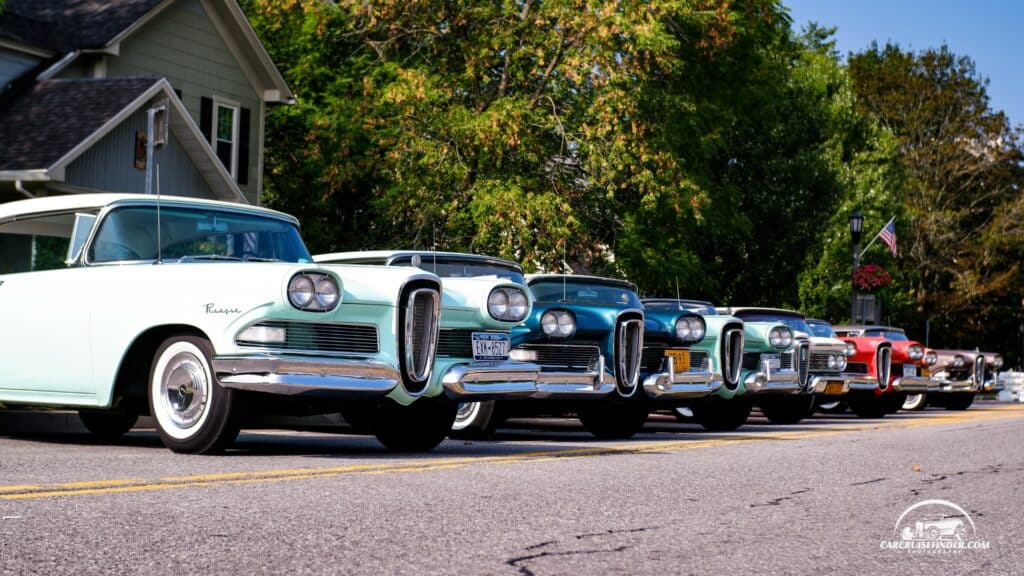
Critics lambasted the design, especially the “horse-collar” or “toilet seat” grille, which was unlike the designs of any of the popular models of the day. Furthermore, many consumers found the Edsel’s pricing confusing, and the cars were plagued with quality control issues—often related to the rushed and complex production process.
The Quick Decline
Despite a brief surge in sales in early 1958, the Edsel could not sustain its momentum. In November 1959, in the face of declining sales and mounting losses, Ford made the decision to discontinue the Edsel. The last Edsel rolled off the assembly line in late 1959, although 1960 models were sold into the following year.
In total, only 118,287 Edsels were produced, far short of the company’s target. The Edsel’s failure cost Ford an estimated $350 million, a monumental loss at the time.
The Legacy
Today, the Edsel is often cited as a textbook example of how not to launch a product. It stands as a stark reminder that hype and investment cannot guarantee success. The Edsel’s failure has been attributed to a variety of factors, including poor timing (the car was launched shortly before a recession), poor design, poor quality control, and an overhyped marketing campaign that raised expectations to unreachable heights.
Yet, despite its commercial failure, the Edsel has found a certain cult status among car enthusiasts and collectors. Its unique design and the story of its ambitious but flawed execution make it a fascinating piece of automotive history.
The Edsel’s story is a cautionary tale about the dangers of overconfidence and the importance of understanding market trends. But it’s also a story of ambition, of the bold vision that drives innovation—even when that vision doesn’t lead to immediate success. In the end, the Edsel serves as a compelling chapter in the narrative of American automobile history—a bold experiment that didn’t pay off, but that offers lessons for us all.